
Reference Model
What Should an Operational Communication System Deliver?
Eleven essential capabilities for reliable, secure and accountable operations.
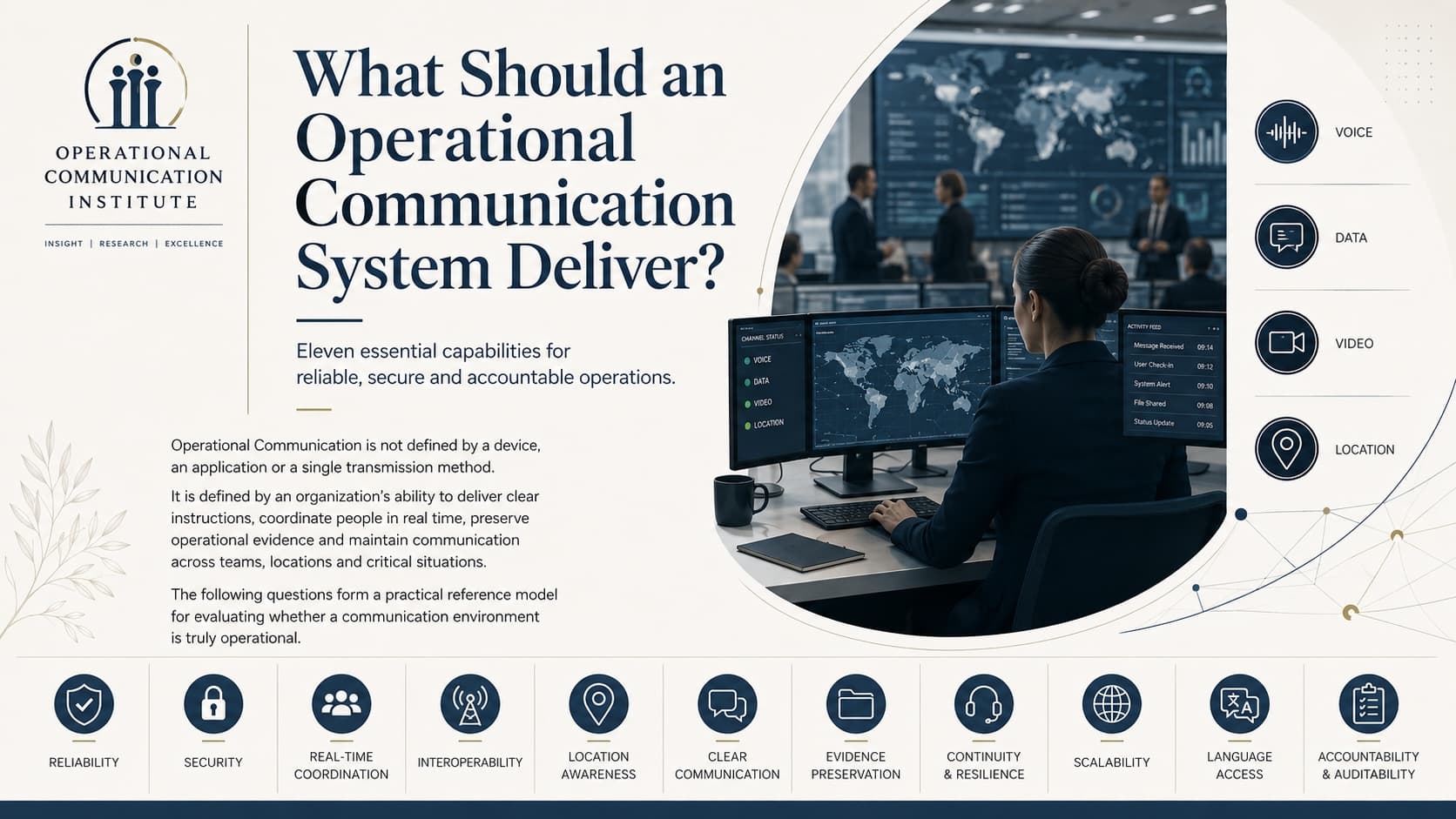
Operational Communication is not defined by a device, an application or a single transmission method. It is defined by an organization's ability to deliver clear instructions, coordinate people in real time, preserve operational evidence, and maintain communication across teams, locations and critical situations. The following questions form a practical reference model for evaluating whether a communication environment is truly operational.
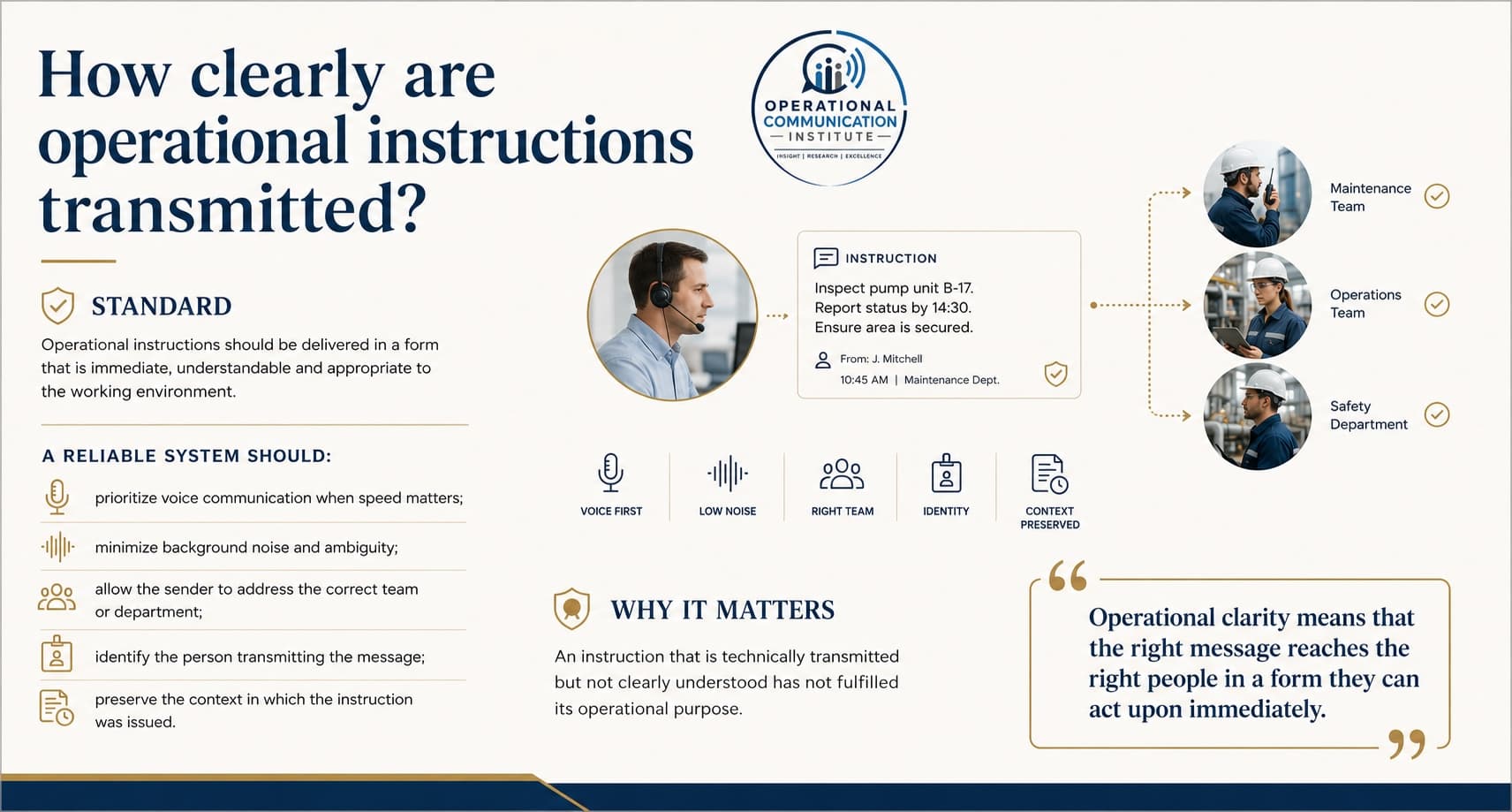
Capability 01
How clearly are operational instructions transmitted?
Standard
- Prioritize voice when speed matters
- Minimize noise and ambiguity
- Allow addressing the correct team
- Identify the sender
- Preserve context
“Operational clarity means that the right message reaches the right people in a form they can act upon immediately.”
Capability 02
Can every critical message be verified?
Standard
- Who sent it
- When it was sent
- To which group
- Whether it is reviewable
- Whether later instructions modified it
“A critical instruction should remain verifiable after the operational moment has passed.”
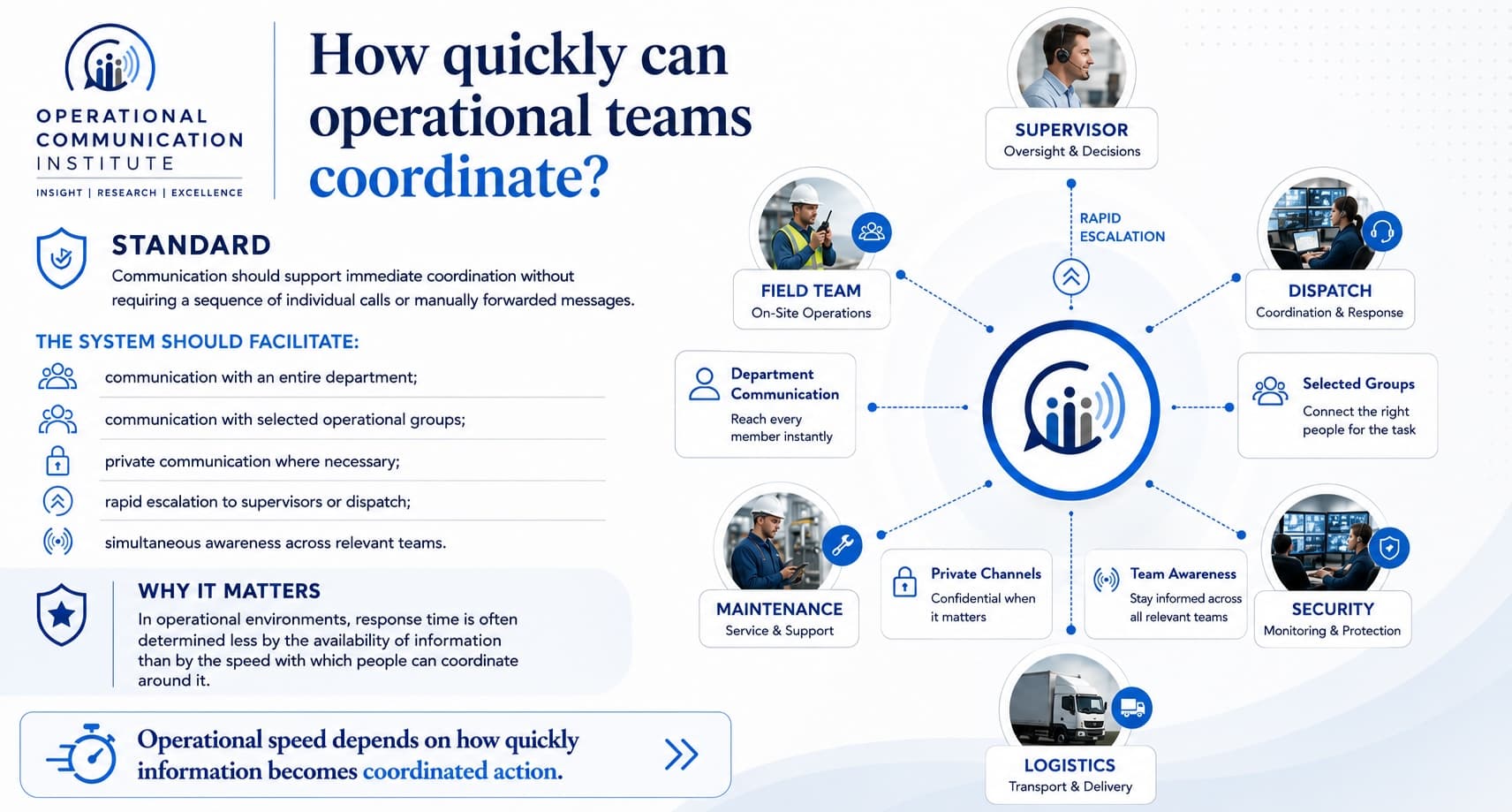
Capability 03
How quickly can operational teams coordinate?
Standard
- Department-wide communication
- Group-selective communication
- Private communication
- Rapid escalation
- Simultaneous awareness
“Operational speed depends on how quickly information becomes coordinated action.”
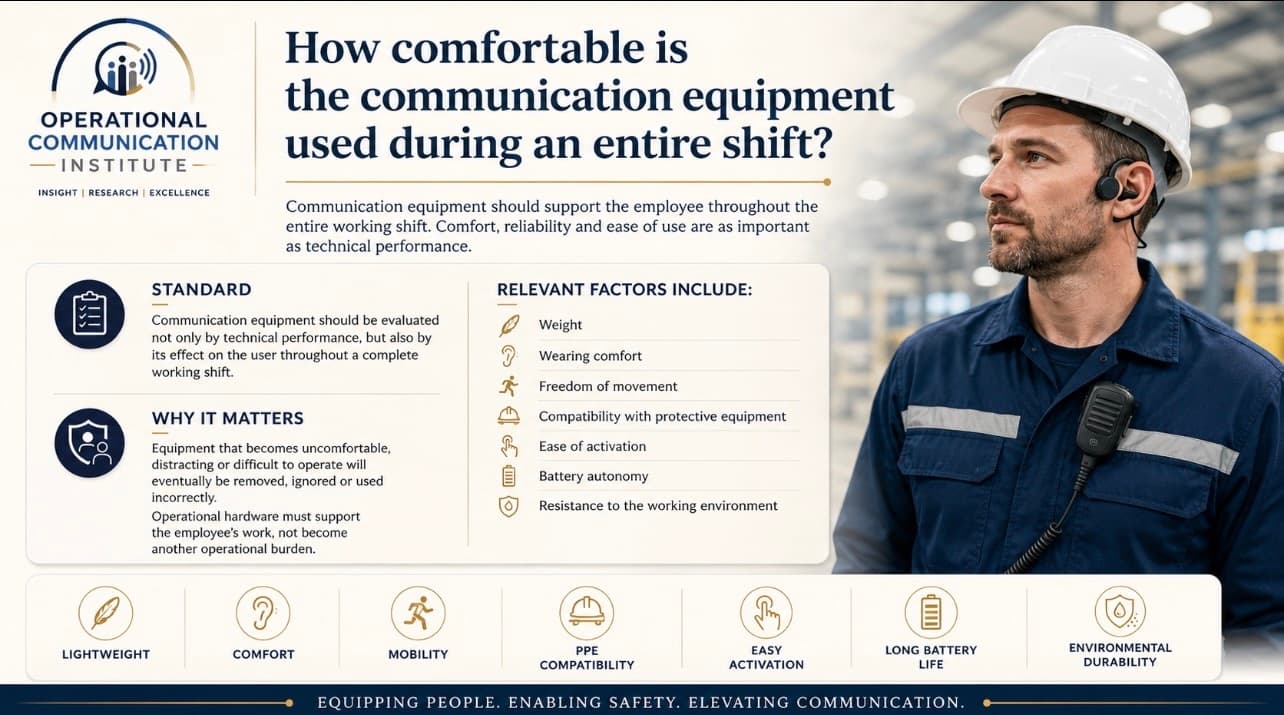
Capability 04
How comfortable is the equipment during an entire shift?
Standard
- Weight
- Comfort
- Freedom of movement
- Compatibility with protective equipment
- Ease of activation
- Battery life
- Durability
“Operational hardware must support the employee's work, not become another operational burden.”
Capability 05
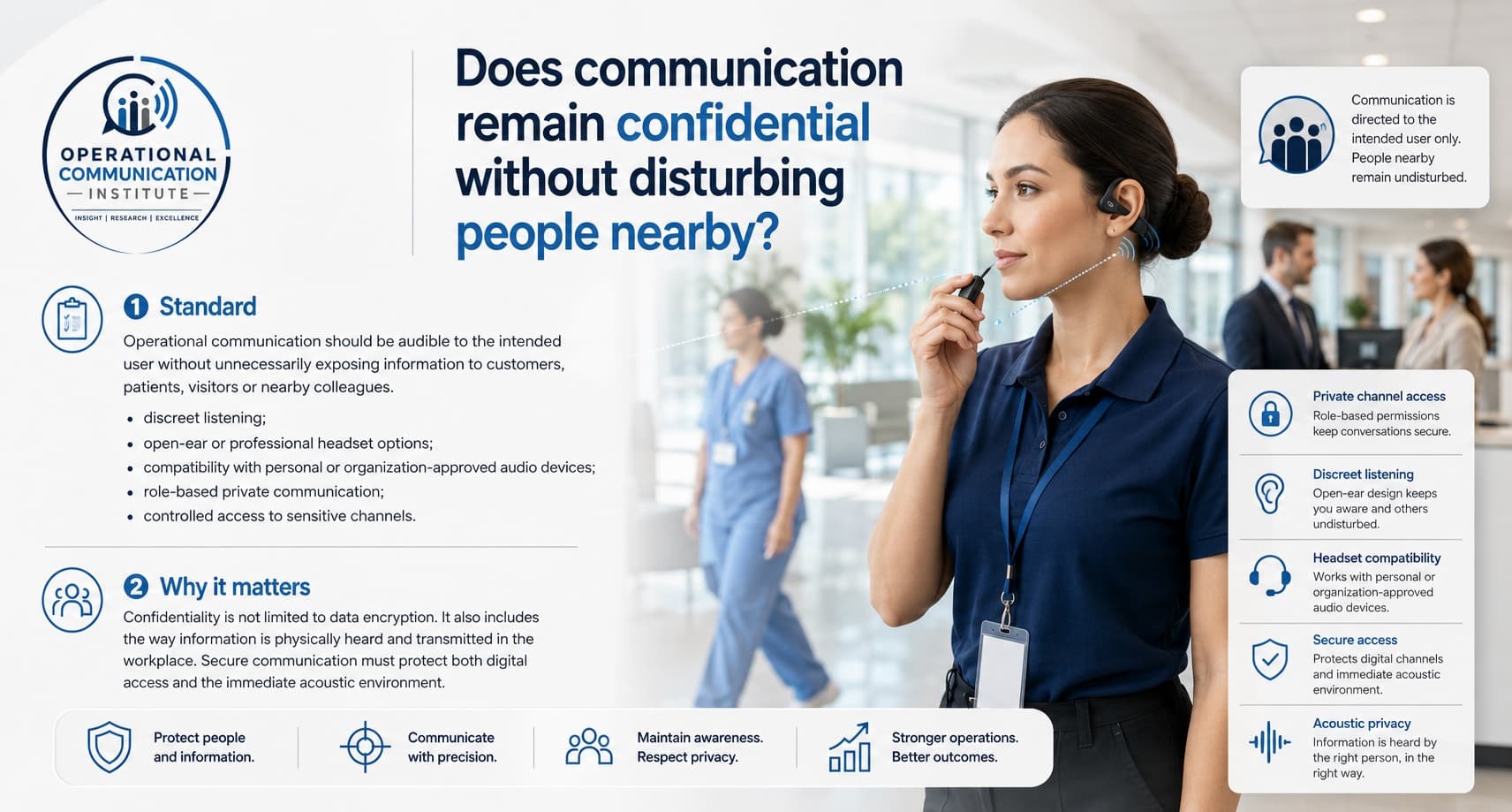
Does communication remain confidential without disturbing people nearby?
Standard
- Discreet listening
- Open-ear or professional headsets
- Role-based private communication
- Controlled channel access
“Secure communication must protect both digital access and the immediate acoustic environment.”
Capability 06
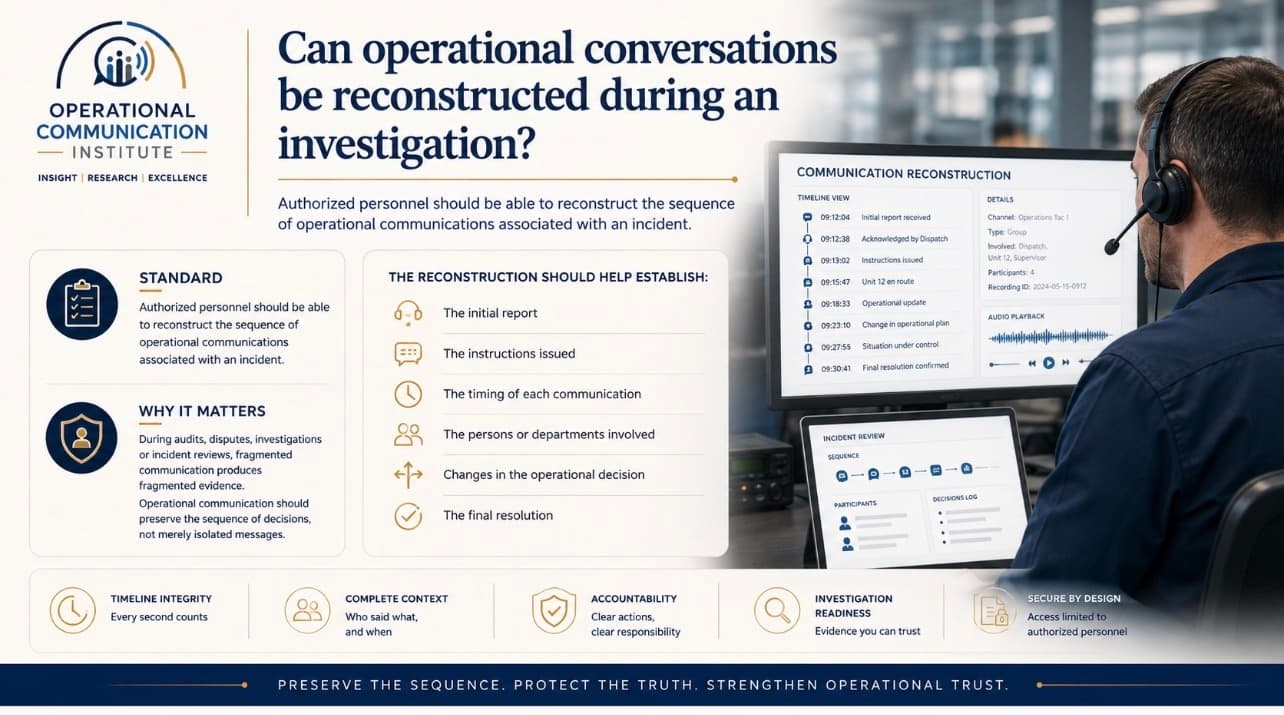
Can operational conversations be reconstructed during an investigation?
Standard
- Initial report
- Instructions issued
- Timing
- People and departments involved
- Decision changes
- Resolution
“Operational communication should preserve the sequence of decisions, not merely isolated messages.”
Capability 07
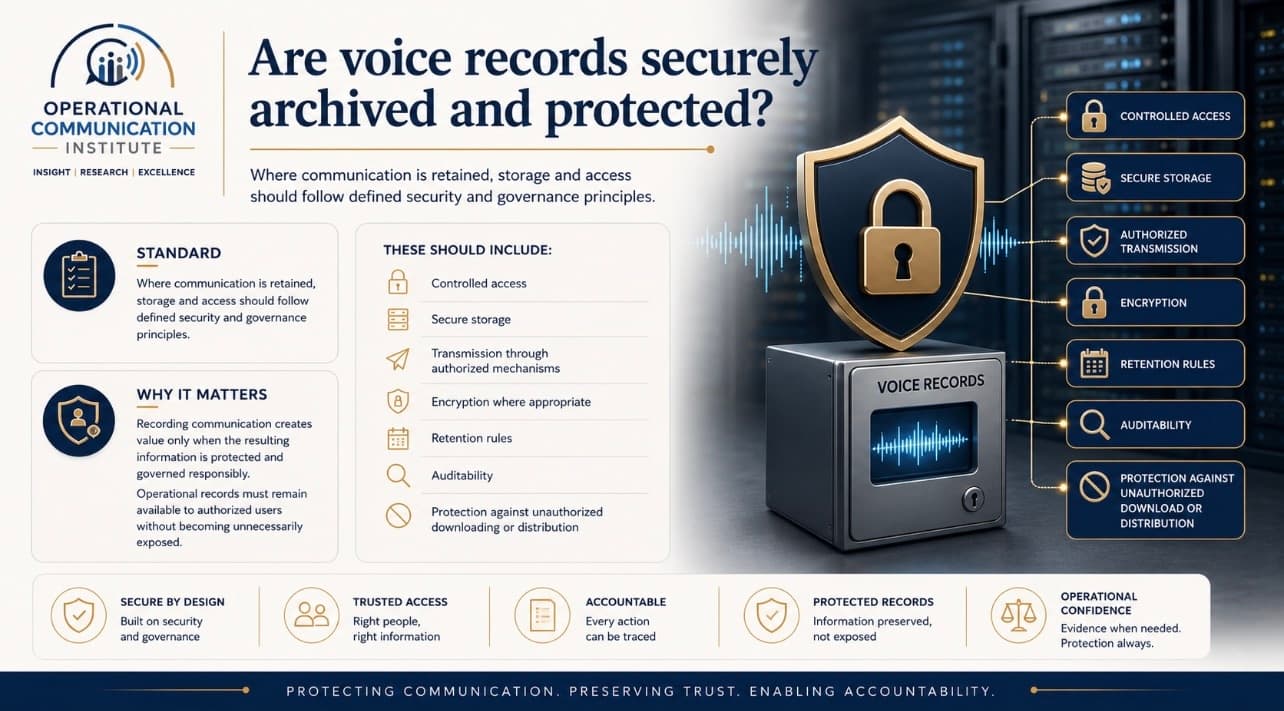
Are voice records securely archived and protected?
Standard
- Controlled access
- Secure storage
- Authorized transmission
- Encryption
- Retention rules
- Auditability
“Operational records must remain available to authorized users without becoming unnecessarily exposed.”
Capability 08
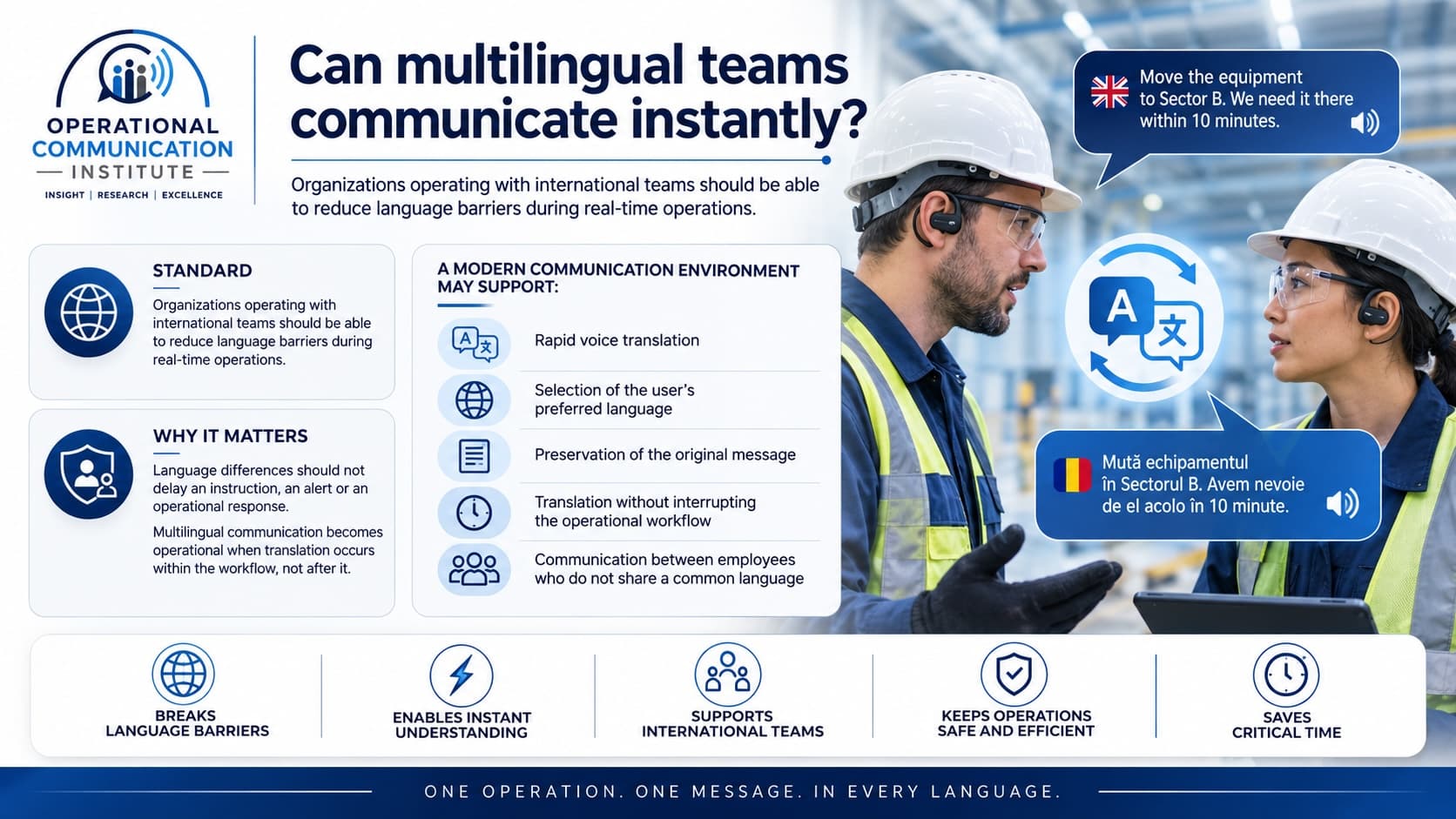
Can multilingual teams communicate instantly?
Standard
- Real-time voice translation
- Preferred-language selection
- Preserved originals
- In-workflow translation
“Multilingual communication becomes operational when translation occurs within the workflow, not after it.”
Capability 09
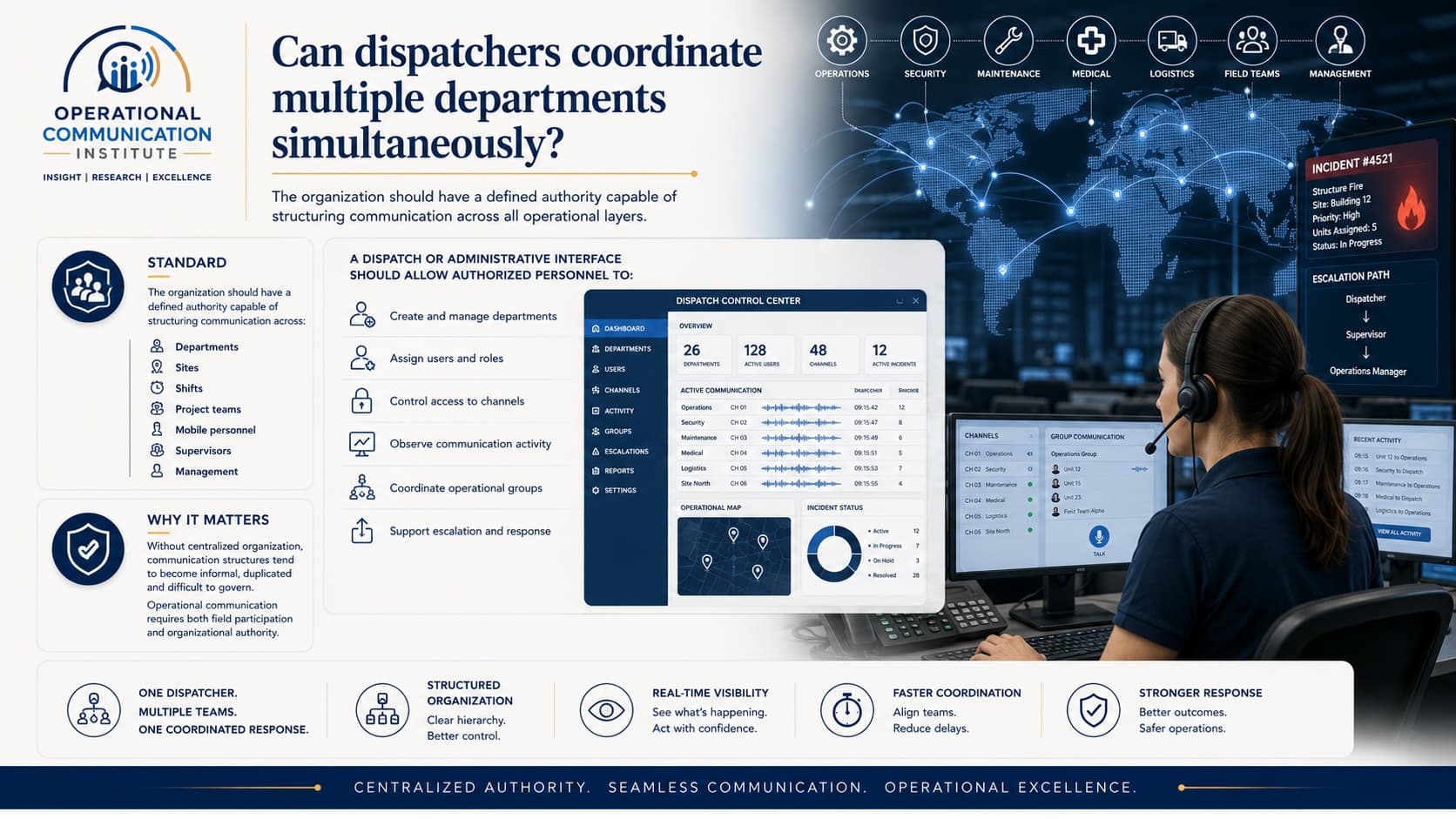
Can dispatchers coordinate multiple departments simultaneously?
Standard
- Department, site, shift and project structuring
- Personnel structuring
- Admin interface for roles
- Access management
- Escalation control
“Operational communication requires both field participation and organizational authority.”
Capability 10
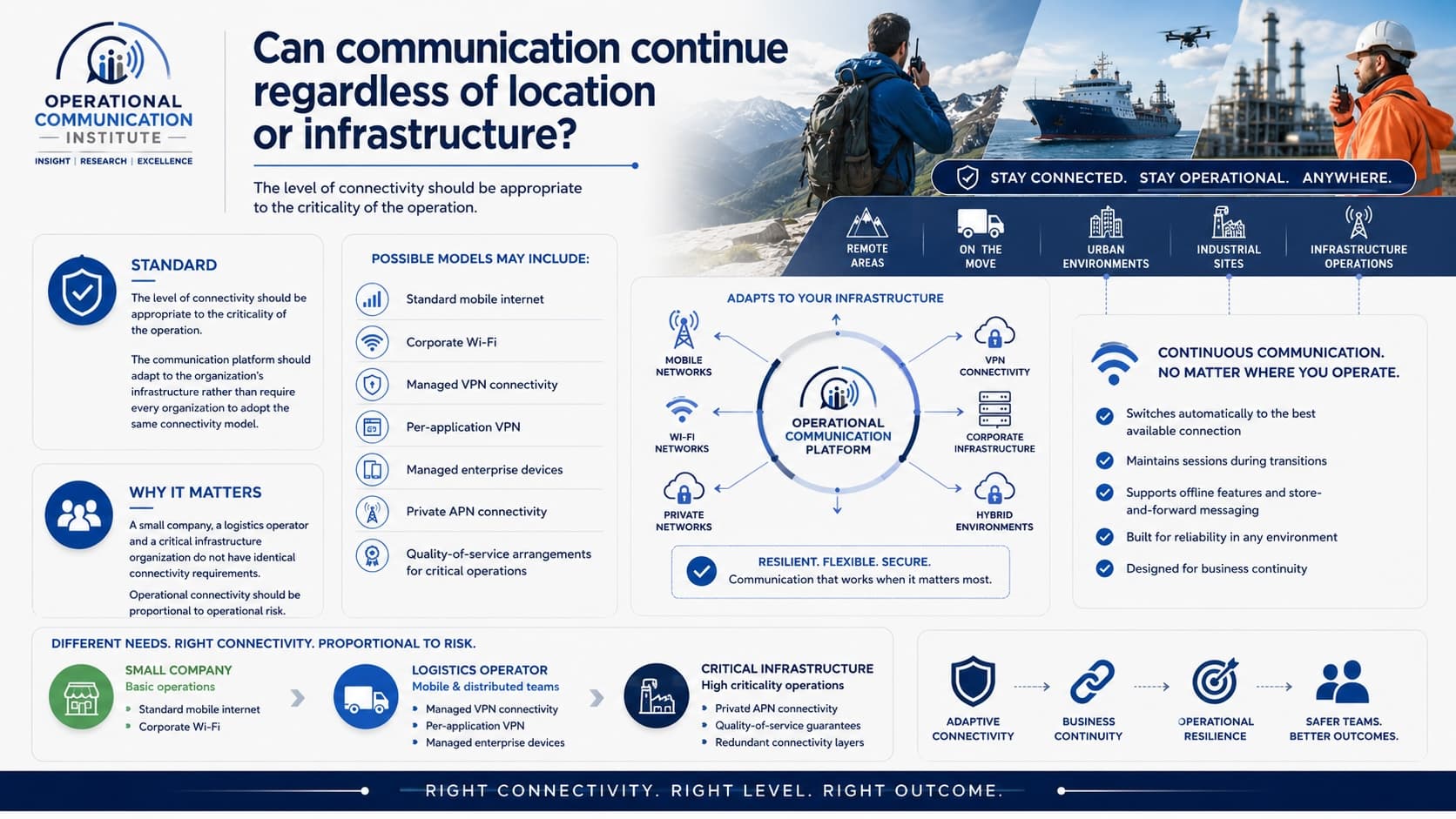
Can communication continue regardless of location or infrastructure?
Standard
- Mobile data
- Corporate Wi-Fi
- Managed or per-app VPN
- Managed devices
- Private APN
- Quality of service for critical operations
- Proportional to risk, not one-size-fits-all
“Operational connectivity should be proportional to operational risk.”
Capability 11
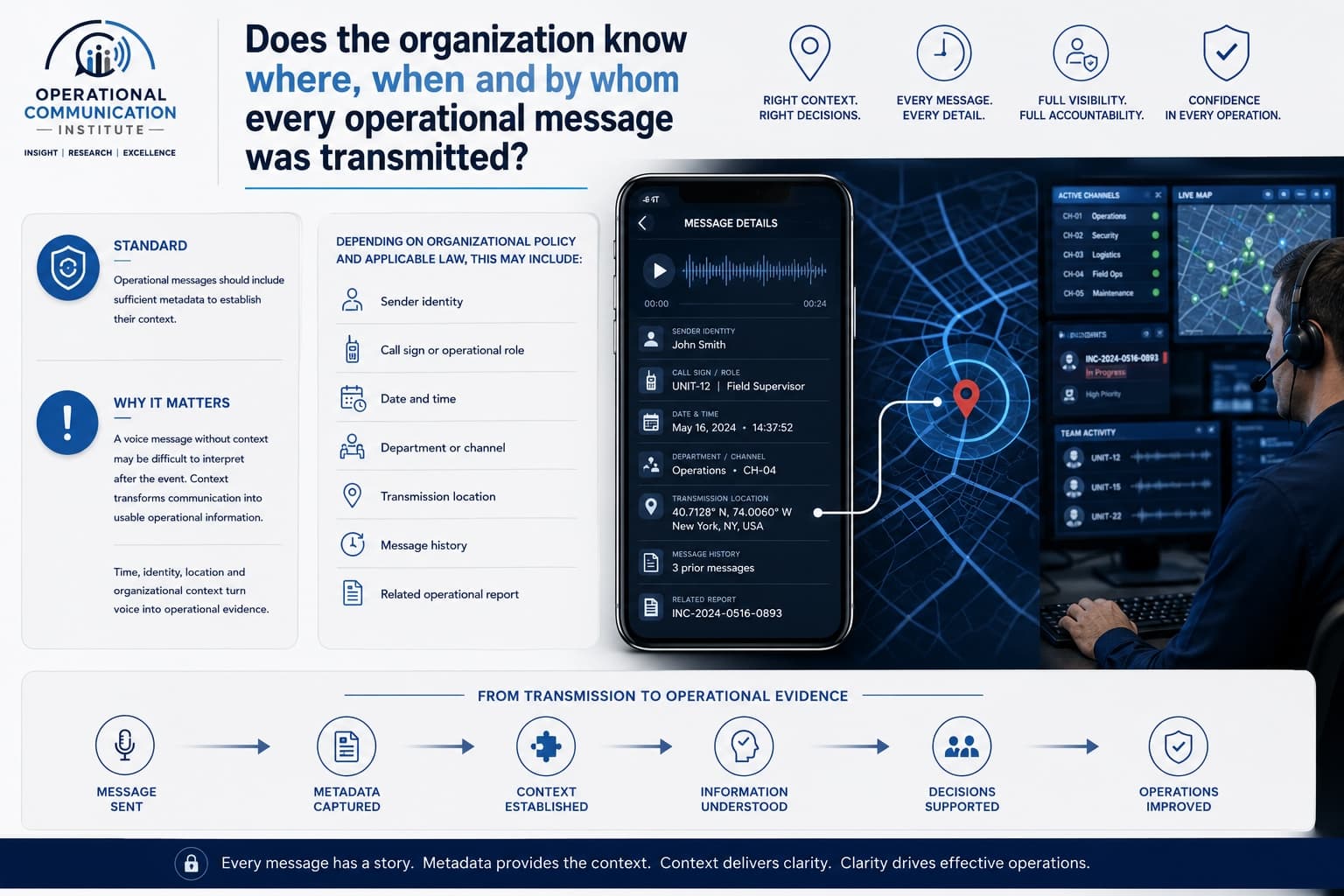
Does the organization know where, when and by whom every operational message was transmitted?
Standard
- Sender identity
- Call sign or role
- Timestamp
- Department or channel
- Location
- History
- Related report
“Time, identity, location and organizational context turn voice into operational evidence.”
The Thesis
The Operational Communication Standard
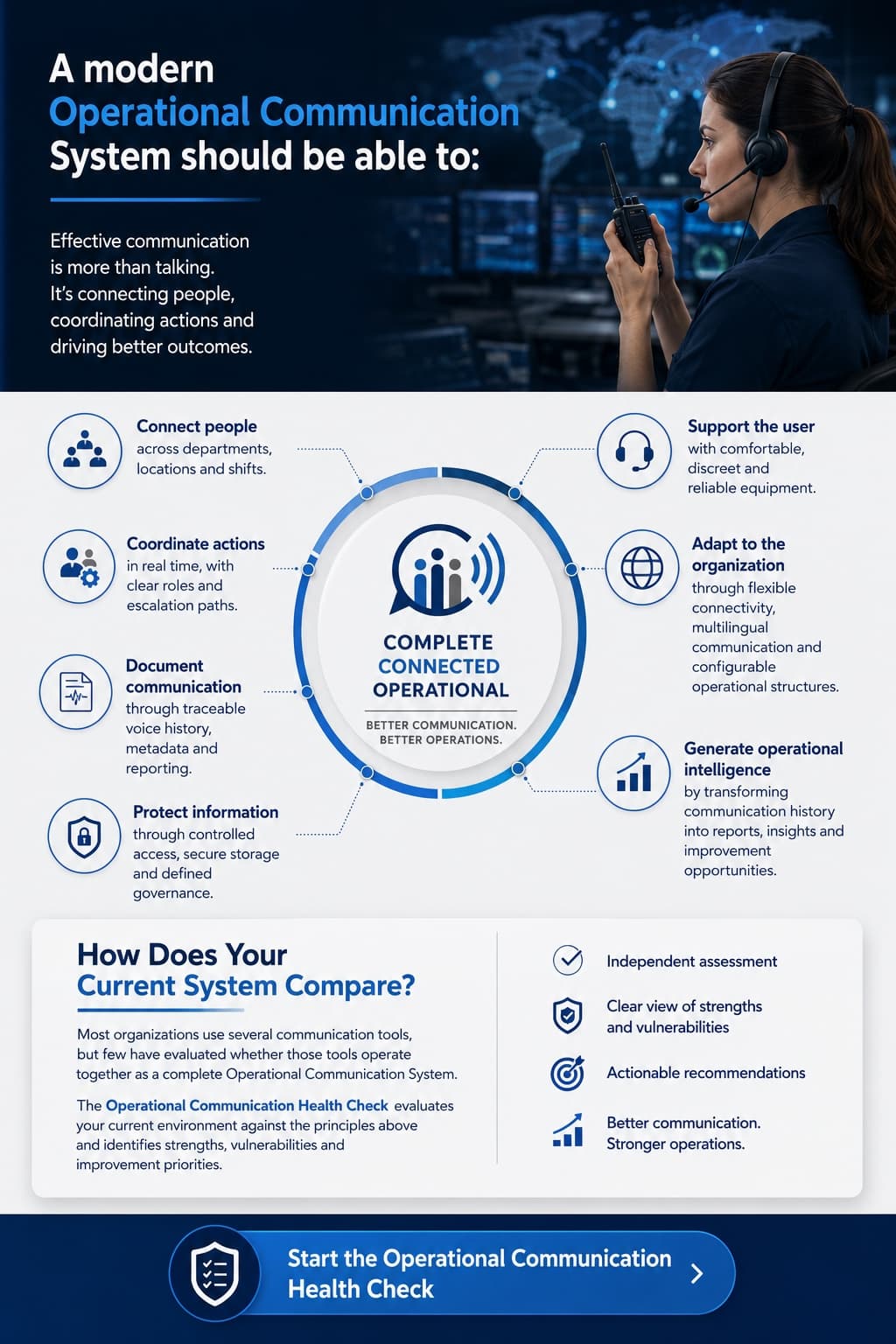
A modern Operational Communication System should be able to:
Connect people
across departments, locations and shifts
Coordinate actions
in real time, with clear roles and escalation paths
Document communication
through traceable voice history, metadata and reporting
Protect information
through controlled access, secure storage and defined governance
Support the user
with comfortable, discreet and reliable equipment
Adapt to the organization
through flexible connectivity, multilingual communication and configurable structures
Generate operational intelligence
by transforming communication history into reports, insights and improvement opportunities
“An Operational Communication System is not defined by how many messages it can transmit. It is defined by how reliably it helps an organization act, prove, learn and improve.”
How Does Your Current System Compare?
Organizations can evaluate their own environment against this reference model in a matter of minutes.
AI-assisted assessment • Business email verification • Personalized executive report
This reference model is published by the Operational Communication Institute as an educational and assessment framework. It does not require the use of a specific technology or vendor. Recommendations are based on the operational context, risk profile and communication requirements of each organization.